
Howden
OS grid reference:-
 The historic market town of Howden is situated in the East Riding of Yorkshire, set close to the River Ouse and lies around 17 miles (27 km) to the south-east of the city of York.
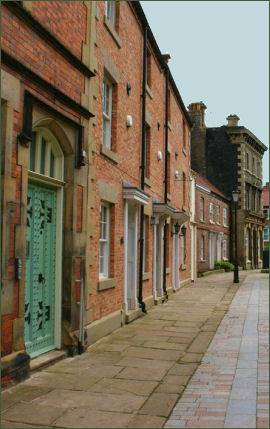 Howden's characterful cobbled streets are lined with handsome Georgian buildings, and the impressive medieval church of Howden Minster, with its chapter house and ruined choir. A grammar school founded in 1265 stands next to the minster and closeby is a manor house founded by the powerful Prince Bishops of Durham.
Howden is an ancient settlement. One of the earliest recorded mentions of the town refer to the Saxon king Edgar, granting Howden Manor to his wife, Ethelfleda in 959. In 1080, William the Conqueror gave the town, including its church, which was later to became the minster, to the Bishop of Durham, who in turn gave the church to the the monks of Durham.
In 1191, Prince John spent Christmas at Howden. Nine years later, John, then King of England, having succeeded his brother Richard the Lionheart, granted Howden the right to hold an annual fair.
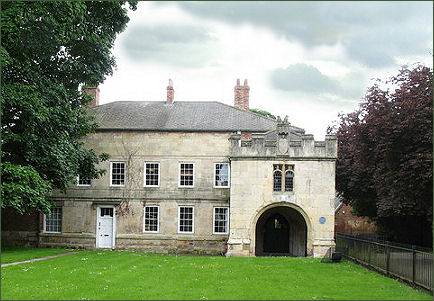
The influential Prince Bishops of Durham often stayed at Howden while travelling to London and built a manor, sometimes called Howden Bishop's Palace, near to the Minster. Most of the manor is now gone, however the banqueting hall, with its large Norman gateway, still survives.The hall (pictured above right) is privately owned and not open to the public, but can be viewed from the outside.
The town is full of charm and character, with Georgian and Victorian houses and narrow lanes and hidden alleyways close to historic Market Place. There is a varied choice of shops and restaurants in the Market Place and Bridge Gate, together with many cafes, pubs and bars. The Grammar School dates to the sixteenth century and remained in use until 1925, it was one of the first endowed schools in East Yorkshire.
Nearby Burnby Hall Gardens have been described as "a jewel in Yorkshire's Crown" and have been awarded the prestigious Yorkshire in Bloom Gold Award for five consecutive years.
Towns and Villages of Yorkshire